Your score, instantly
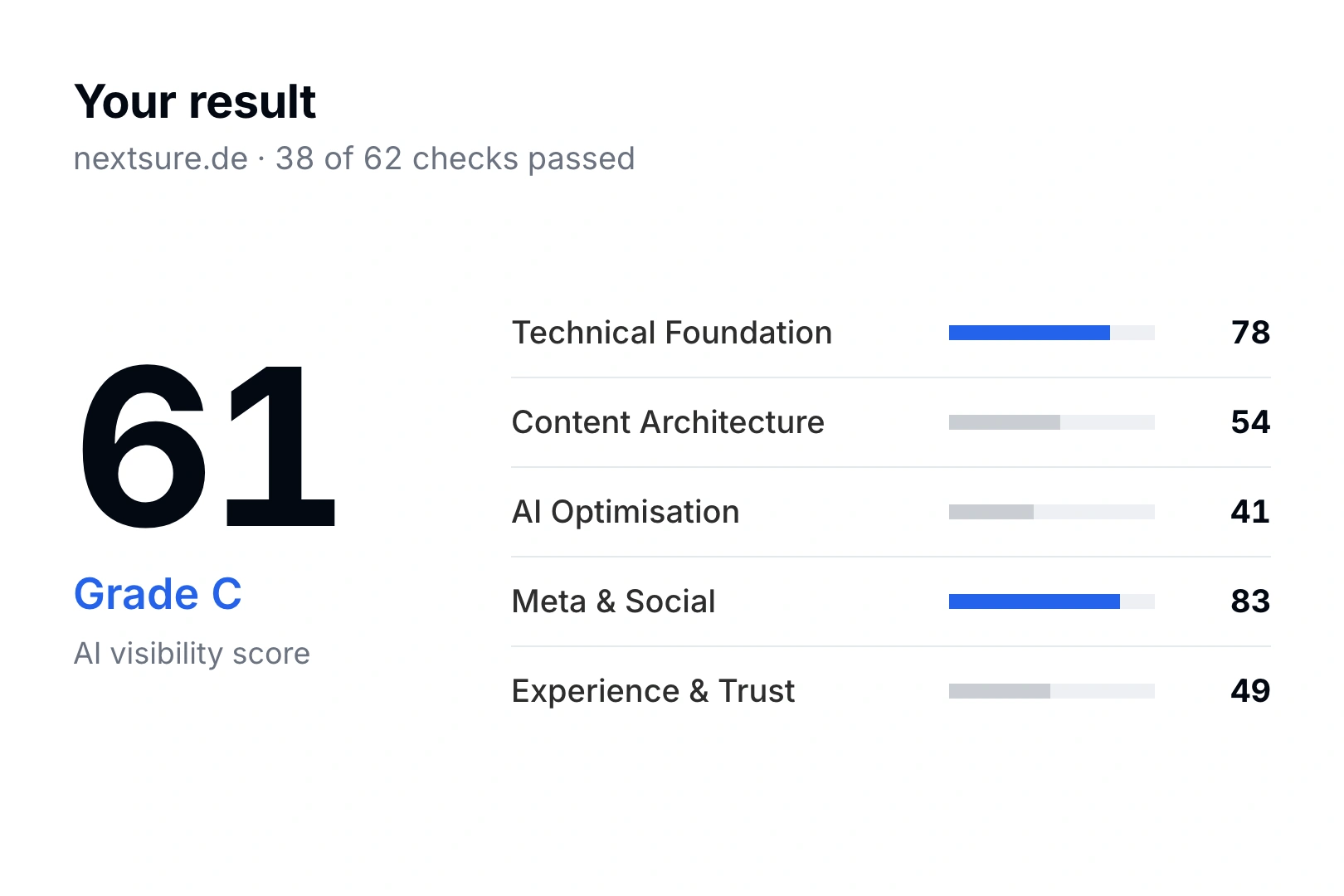
A 0 to 100 AI visibility score with a letter grade from A to F, the moment the crawl completes.
Free health check
The scaile AI Search Health Check runs over 100 checks across your website and returns a list of improvements you can make to become more visible in AI Search. All we need is your domain.
Analyzing …
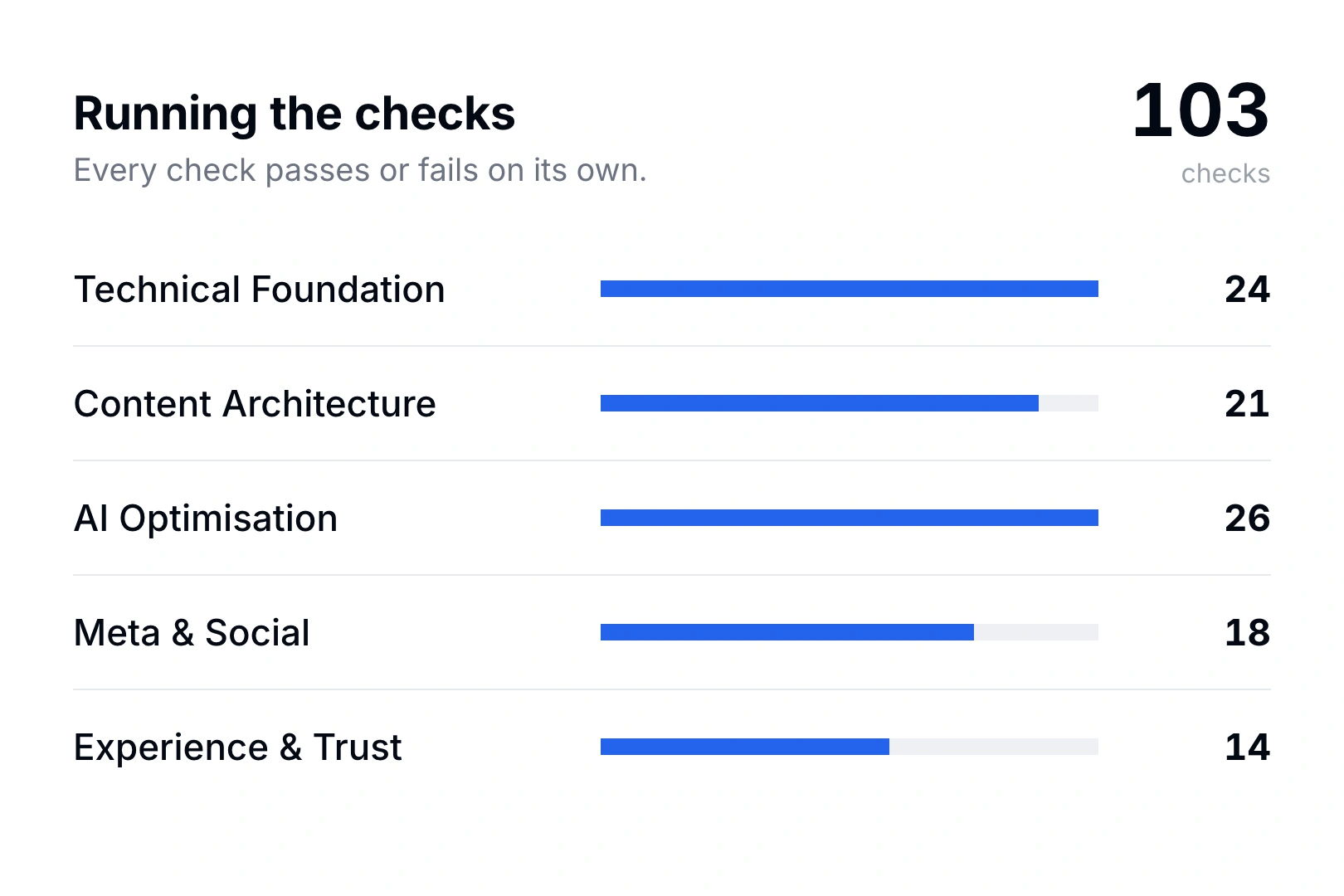
Running the first checks: technical foundation, content architecture, AI optimisation, meta & social.
Your result
Live resultWhat we found first
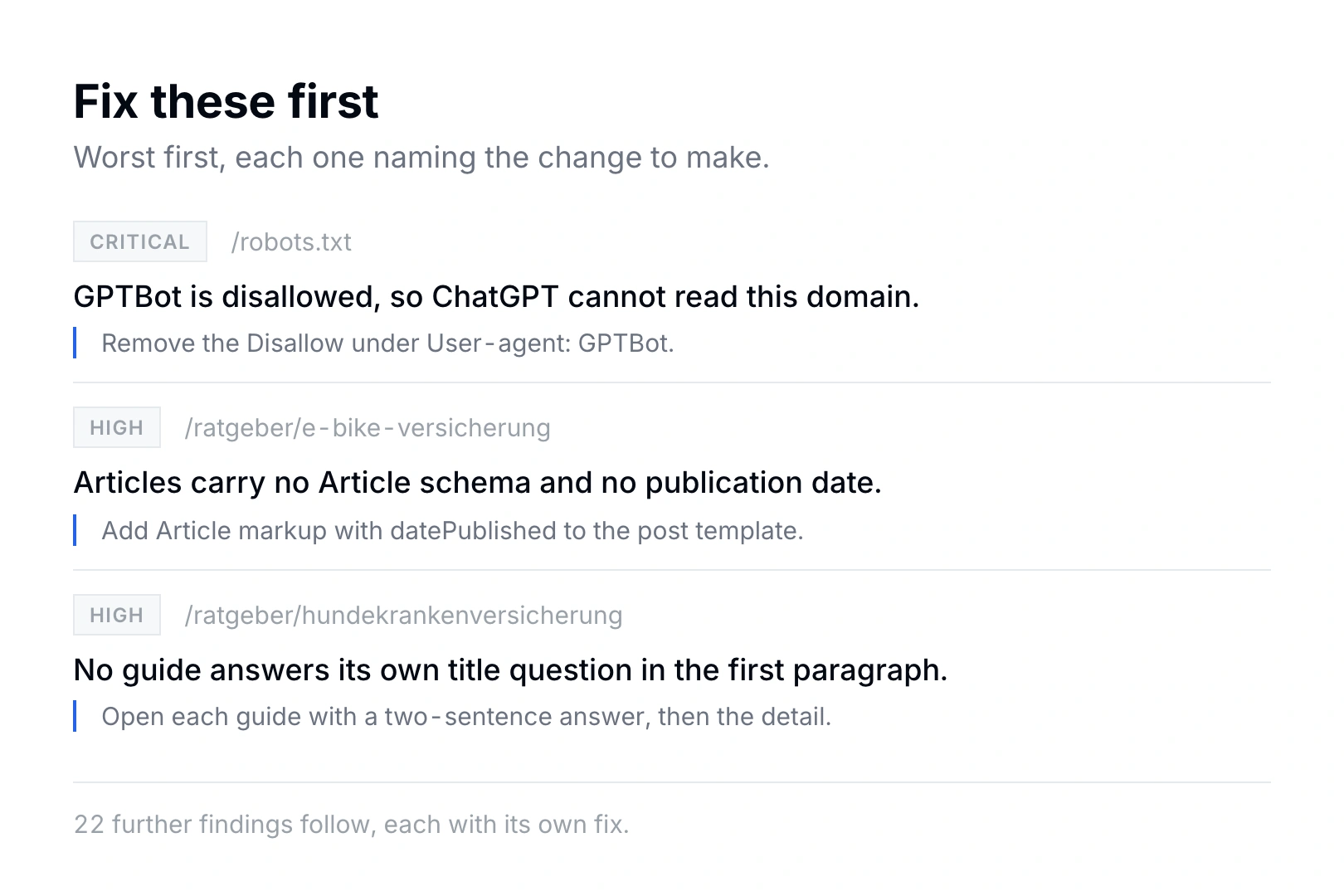
This is a first pass over your homepage, your robots.txt and your sitemap. The full report also reads a sample of your articles, so it reaches the checks left open here and lists every finding, worst first, with the fix for each one.
Building your report…
Generating your PDF and sending it to your inbox. This takes a few seconds.
Your report is on its way
Book a call with Simon to discuss your results.
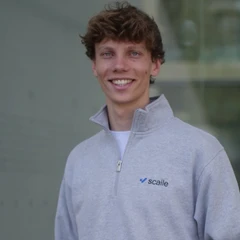
SimonCo-Founder and CEO
Trusted by 40+ Enterprises












A score you can read in seconds, and a list of fixes your team can act on.
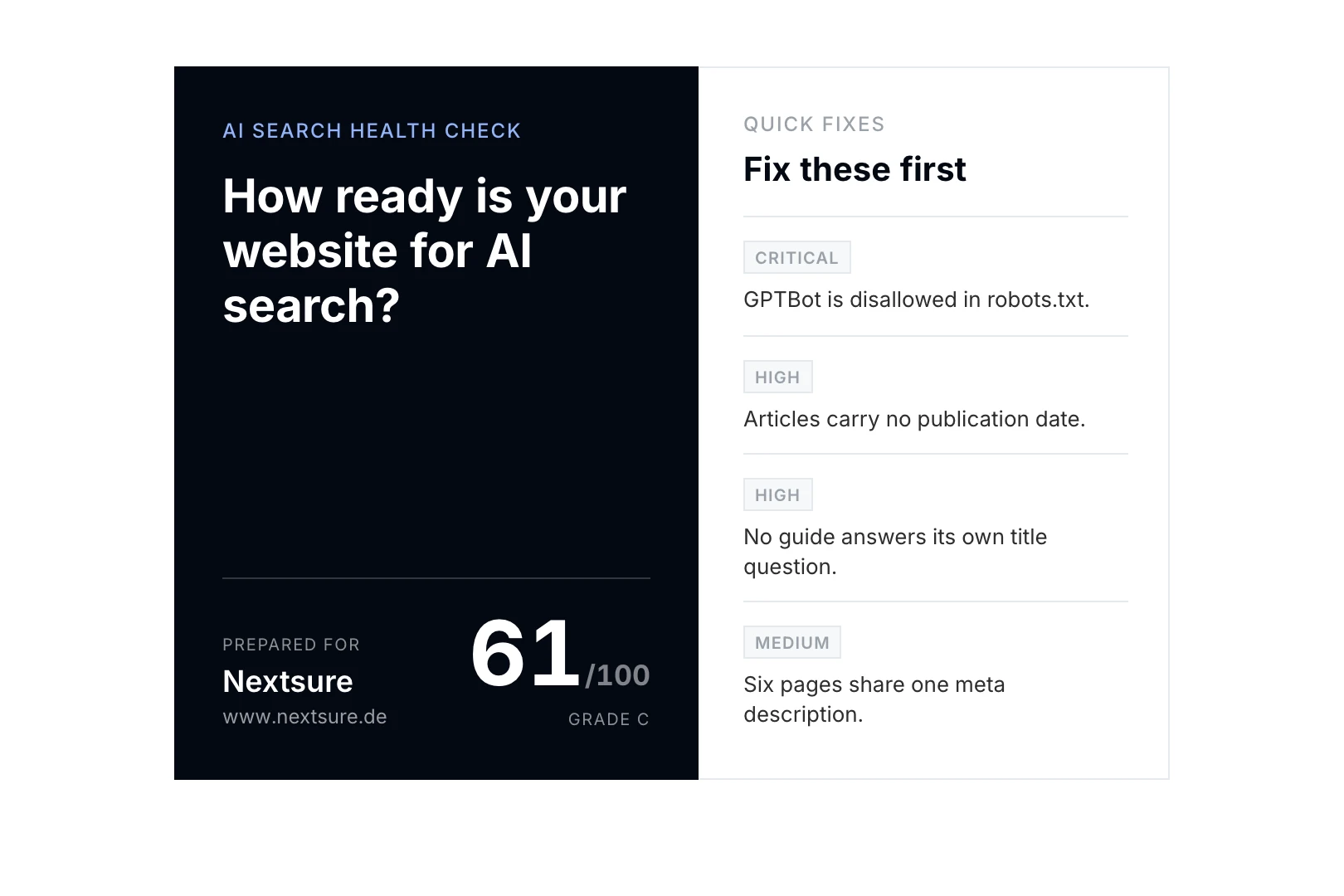
A 0 to 100 AI visibility score with a letter grade from A to F, the moment the crawl completes.
Every check listed pass or fail, each tagged with severity so you know what to triage first.
The biggest-impact wins ranked first, each naming the exact change to make, as a report you can share internally.

One field, no signup and no credit card. The crawl starts immediately.
Across technical foundation, content architecture, AI optimisation, meta and social, and experience and trust. Each check passes or fails on its own.
The checks roll up into a 0 to 100 score with a letter grade, and every failed check is tagged by severity so you know what to triage first.
The score appears on screen straight away. The report follows within the minute: every finding, ordered worst first, each one naming the change to make.
Every number on this page comes from a file we fetched. Nothing is modelled, and nothing that could not be measured is scored.
The questions this check exists to answer, answered here whether or not you run it.
A site is ready for AI search when three things are true at once: an AI crawler is allowed to fetch it, the pages it fetches state their answers plainly enough to be quoted, and the markup around those pages says who wrote them and when. Most sites fail the first or the third quietly: a single line in robots.txt or a missing publication date costs more visibility than any amount of writing. This check tests all three and tells you which one is costing you.
On this 0 to 100 scale, 90 and above is an A and means nothing is structurally in your way. 70 to 89 is a B or C: readable, with named gaps worth closing. Below 70 there is normally one blocking problem rather than fifty small ones, and it is usually crawler access or missing structured data. The score is not a ranking and does not predict traffic. It measures whether an assistant can read and attribute your pages at all, which is the condition for everything that comes after.
A classic SEO audit scores you for ranking in a list of links: crawlability, speed, titles, backlinks. An AI search audit scores you for being read and repeated by an answer engine, which weighs different things: whether a machine can parse the answer out of your page, whether the page carries a date and an author it can attribute, and whether the specific crawlers that feed ChatGPT, Claude and Perplexity are allowed in. The two overlap on the technical foundation and diverge entirely after it.
Six matter today, and they do not do the same job. GPTBot and ClaudeBot collect training data. OAI-SearchBot and PerplexityBot fetch pages so they can be cited in an answer a user is reading right now. Google-Extended governs whether your content feeds Gemini and AI Overviews. CCBot feeds Common Crawl, which many models are built on. Blocking a training crawler is a defensible choice. Blocking a citation crawler such as OAI-SearchBot or PerplexityBot removes you from answers your buyers are reading, which is almost never what the person who edited robots.txt intended.
In order of how often it turns out to be the cause: the crawler is blocked, so there is nothing to read; the pages are readable but never answer a question anyone asks, so there is nothing to quote; or the pages answer well but carry no date, author or source, so there is nothing safe to attribute. This check finds the first and the third. Finding the second means looking at what buyers in your category actually ask, which is what the AI Visibility Check does.
Checks last reviewed Reviewed by Simon Wilhelm, Co-Founder and CEO of scaile.

The others run on their own too. No registration, no credit card, no call required.

See your site the way AI crawlers see it: your structure drawn as a map, with the pages they cannot reach.
See who ChatGPT, Gemini and Perplexity name when your buyers ask. Ten real buying questions, three assistants, the full leaderboard.
Need more detail? Book a Call
Yes. No cost, no credit card, and no call required to get your report. If you want to go deeper afterwards, you can book a call, but that’s your choice.
The score appears within seconds. The full report is emailed to you straight after, usually within a minute.
Start with the failures tagged highest severity; each one names the change to make. If you want them prioritised against your commercial goals rather than by severity alone, that is what a call is for.
No. A regular audit scores you for ranking in classic search. This scores you for being read and cited by AI answer engines, which weigh different things: how your pages are structured, whether a machine can parse your answers, and what your metadata says.
Yes. The check works on any publicly reachable site, and it obeys that site’s robots.txt exactly as it obeys yours.
Fetch your own robots.txt and look for GPTBot and OAI-SearchBot. If either is disallowed, ChatGPT cannot read the paths under that rule. This check does it for you, for all six AI crawlers at once, and applies each rule path by path rather than only at the root, so an allow nested inside a disallowed folder is read the way the real crawlers read it.
No. Nothing is installed, no tag is added and no verification is needed. The check reads the same public files any visitor or crawler can request.
One pass, on request. This is a diagnostic, not monitoring: it tells you where you stand today. Continuous tracking across the AI engines is what the platform does.
We use your URL and email only to produce and send your report. We don’t share or sell your data, and the data stays in the EU. (GDPR-aligned, Hamburg-based.)